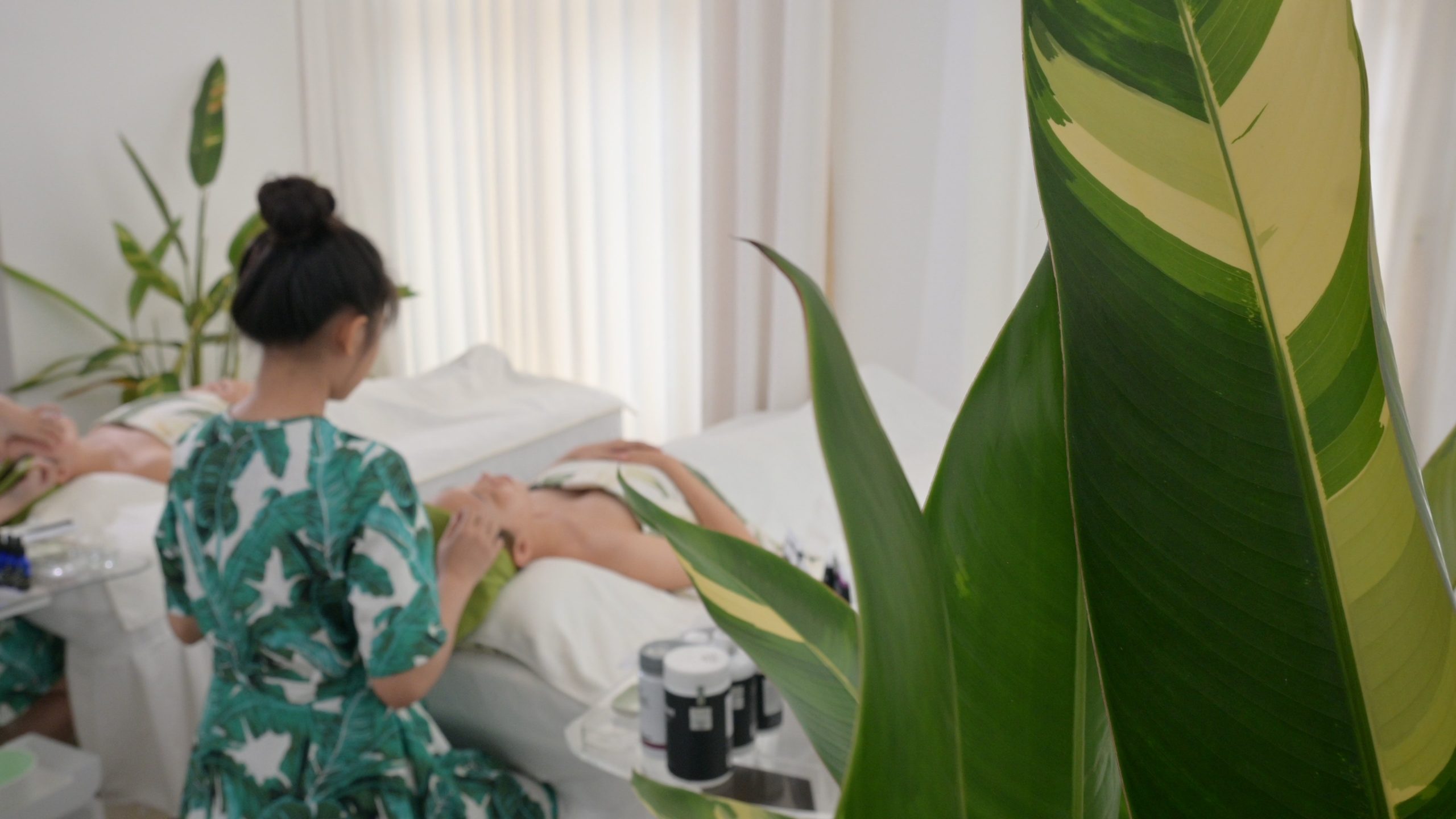
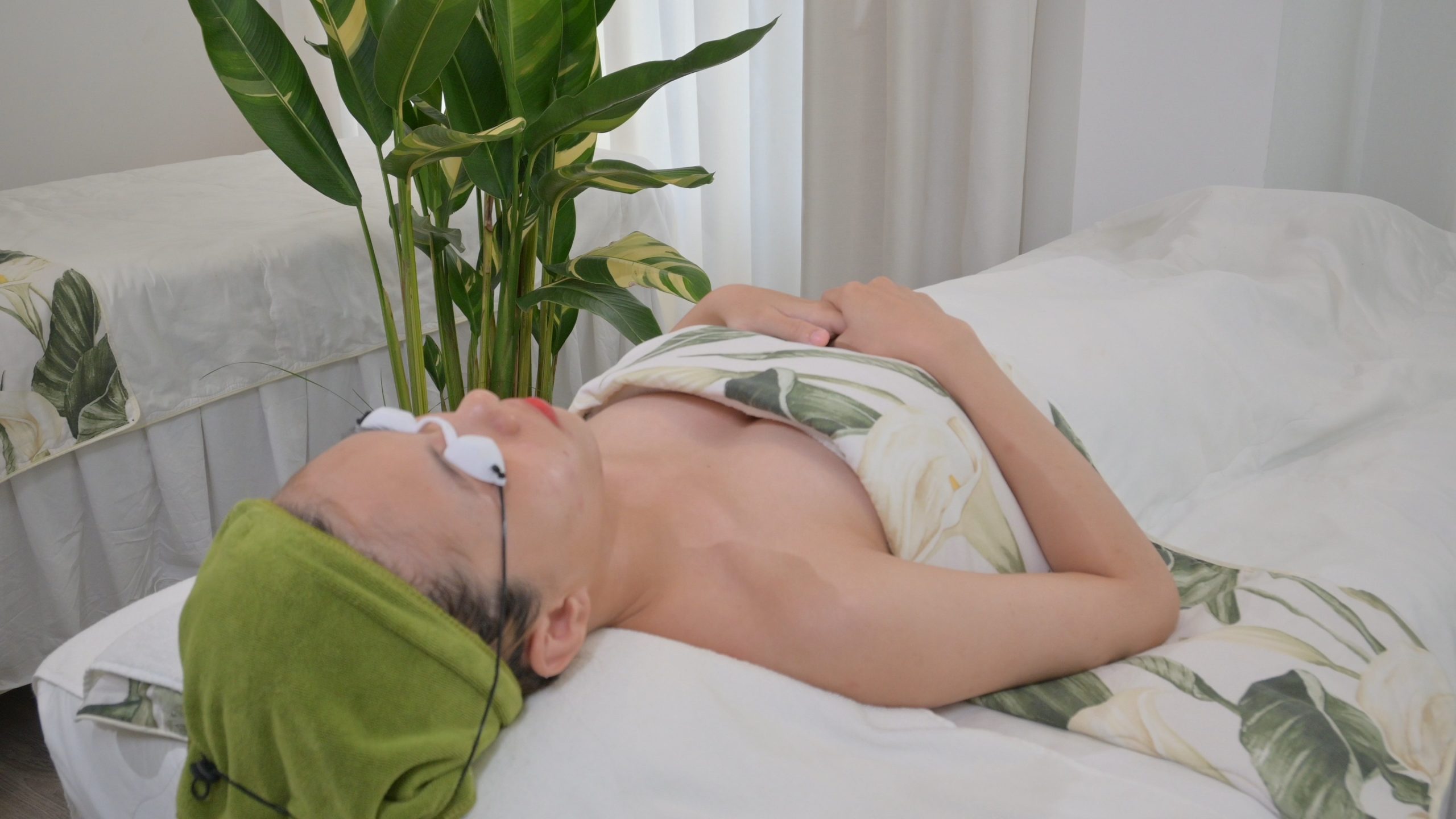
Routine Skin Care Is a Different Problem From Treating Skin That Already Has a Condition — and Confusing the Two Costs People Twice

Almost everything written online merges these two. They are fundamentally different problems: one keeps a system inside its equilibrium, the other drags a system that has already left equilibrium back into it. They need different intensities, different intervals, and often different kinds of facility.
① Why skin needs “routine”: the mechanics of an organ that constantly renews itself
Skin is not a static surface you apply products to. It is an organ running several cycles at once, each with its own time constant.
Keratinocyte turnover — about 28 days. Cells are born in the basal layer of the epidermis, flatten, lose their nuclei, become corneocytes and shed at the surface. In a young adult the loop takes roughly four weeks; it slows with age and slows further when the barrier is damaged. When cells do not shed on schedule, the stratum corneum thickens, the surface becomes less smooth, light scatters instead of reflecting — which is exactly the sensation people call “dull skin” and which no single measurement captures.
Sebum production — daily. Sebaceous glands secrete continuously, more heavily in the T-zone, modulated by hormones, temperature and humidity. Sebum meets retained corneocytes inside the follicular canal, oxidises, and forms a comedo. This process never stops, which is why it cannot be “dealt with once”.
The lipid barrier — depleted and rebuilt over days to weeks. Intercellular lipids (ceramides, cholesterol, free fatty acids) hold water inside the skin. Every harsh cleanse, every over-concentrated active, every long flight, every day in air conditioning removes some. The barrier rebuilds itself, but it needs time — and if depletion outruns repair, skin enters a loop: dryness → compensatory oil → congestion → harsher cleansing → more dryness.
Melanin — baseline daily production. Melanocytes produce melanin continuously in response to UV, heat and inflammation, then transfer it to keratinocytes. When the stratum corneum sheds, some pigment leaves with it. So evenness of tone is the result of a balance: rate of pigment formation against rate of clearance. A one-off intervention changes only one side of that balance, and only briefly.
Collagen — a cycle measured in months. Fibroblasts build new collagen slowly, and production declines yearly from around age 25. Every improvement in firmness is therefore cumulative, never immediate.
Two problems, not one
Set those five cycles side by side and the distinction becomes obvious.
Routine care is the balance-keeping problem. The goal: keep the stratum corneum from thickening, keep sebum from compacting into comedones, keep barrier depletion from outrunning repair, keep baseline pigment from accumulating. Its signature: low intensity, even intervals, performed before symptoms appear. Its results are nearly invisible — what you receive is the problems that did not happen, which is why it is the most frequently skipped.
Treating skin that already has a condition is the pulling-back problem. The skin is already inflamed, already barrier-impaired, already hyperpigmented, already slack. Intensity must be higher, the protocol must aim at a specific target, the timeline is longer, and a meaningful share of these cases leave the scope of care altogether and become medical treatment.
The practical consequence, and the reason this article exists: using the first problem’s tools on the second fails, and using the second problem’s tools on the first causes harm. Someone with severe inflammatory acne having a weekly hydrating facial will not clear. Someone with healthy skin having strong peels and weekly extractions “preventively” will manufacture the barrier damage they did not previously have. Both waste money; the second group pays twice, because repair comes next.

⑦ Keeping a routine when you do not live nearby
Routine care has an awkward property for distant clients: it benefits most from consistent intervals, yet it is hardest to keep consistent from hundreds or thousands of kilometres away. The honest way to handle that is to separate what must happen in the treatment room from what you can do at home.
Flying in from abroad.
- Lona recommends leaving at least 2 weeks between your last treatment and your flight. This is the clinic’s general recommendation; the exact interval for any specific procedure is set by your treating physician. Routine treatments carry less risk than stronger procedures, but keep the buffer anyway — if your skin reacts unexpectedly, you are still in Vietnam to have it managed.
- Group procedures into one trip. If your visit includes both clinic-side work and routine care, list everything at the outset so the sequence is planned together. A superficial peel scheduled at the wrong point relative to a medical procedure can force both to be postponed.
- Remote consultation before you fly. Send daylight photographs and the list of products you currently use via WhatsApp +84 777 679 902, Zalo, or email Contact@lona.vn. For travelling clients the purpose of that consultation is not to sell a treatment — it is to establish whether you are facing the first problem or the second, because that answer determines how many days of your trip to budget.
- Long-haul flights dehydrate skin. If you book within the first two days after landing, tell us, so we steer you toward a hydration-and-repair treatment rather than an intensive cleansing one.
- For you, home care is the decisive part. If you live overseas, treatment-room sessions are only a few scattered points in your year; whether the balance holds depends on three daily things — gentle cleansing, moisturising, sun protection. Ask for instructions specific to your skin before you fly out.
From Ho Chi Minh City — is a weekend worth it? If you attach the session to a trip home you were making anyway, very much so. If you would travel specially for a single maintenance session, say so: your interval probably should be longer than a local client’s, with the difference made up at home. We say this because advising you to come more often than you realistically can is the fastest way to make you abandon the routine entirely.
From the Mekong provinces — same-day return. This group needs no downtime and causes no peeling; several service descriptions state clients resume normal activity and work afterwards, which makes it the group best suited to a same-day trip. Allow extra time on the first visit for the skin assessment, then lock in slots for the whole series so you do not lose a wasted journey.
② The map of routine-care approaches — including the ones Lona Home Spa does not offer
The “offered” and “not in the catalogue” labels below reflect the published service catalogue as of October 2026. If you need a direction that is not listed, ask — if it is not something done here, you will be told so directly and pointed somewhere suitable.
1. Home care only. Gentle cleansing, moisturising, daily sun protection. Suits: normal skin without significant congestion and without an active concern. Limitation: it cannot clear mature comedones lodged deep in the follicular canal, and there is no objective assessment step, so small changes go unnoticed until they become problems. This is the foundation, and if you can only do one thing, do this one.
2. Routine deep-cleansing facials. Cleansing, releasing congestion with steam and oil absorption, extraction of mature comedones, soothing, sun protection. Suits: most skin types, at an appropriate interval. Limitation: done too frequently it damages the barrier — and this is exactly where many people harm their own skin, assuming more is better. Lona Home Spa offers this.
3. In-clinic hydrating and nourishing masks. Modeling masks, hydrating masks and detoxifying masks form a temporary occlusive film that improves absorption of the preceding step and reduces transepidermal water loss while in place; intensive hydration combines humectants that draw water with occlusive agents that hold it. Suits: dry, dehydrated, sun-exposed or tired skin, and virtually any skin type as a maintenance step. Limitation: the hydration gained in a single session is temporary and must be sustained at home — one mask does not replace daily moisturising. Lona Home Spa offers this.
4. Routine superficial peels. AHAs, BHA and PHAs break the bonds between corneocytes to compensate for a slowed shedding cycle. Suits: thickened keratin, oily skin, congestion. Limitation: on inflamed or barrier-impaired skin, peeling worsens things; concentration and interval must be selected by a practitioner for your condition. Lona Home Spa offers this at superficial strengths.
5. Bio-LED and DPL light. Selectively absorbed wavelengths used for antibacterial effect, soothing, or action on pigment. Suits: mild inflammatory acne, uneven tone, skin needing calming after extraction. Limitation: with melasma, light is double-edged, and incorrect parameters can darken it. Lona Home Spa offers this at care-level settings.
6. Routine lifting with manual tools and surface radiofrequency. Heat and mechanical action at depth to stimulate fibroblasts and support circulation. Suits: early ageing, reduced elasticity, fine lines. Limitation: change is cumulative, never immediate, and for established laxity this direction is not enough on its own. Lona Home Spa offers this.
7. The eye area treated as its own category. Periorbital skin is markedly thinner, has few sebaceous glands, carries fine vessels immediately beneath the surface, and endures tens of thousands of muscle contractions daily — so it dehydrates faster, shows shadowing more readily, and develops fine lines earlier than the rest of the face. Limitation: shadowing caused by orbital bone structure or by deep vasculature does not improve with surface care. Lona Home Spa offers this.
8. “Guaranteed number of sessions” and “guaranteed results” packages. The market offers these, and the demand is genuine because they feel like certainty. Lona Home Spa does not guarantee a session count and does not promise results. The reason is biological: response rate varies with age, hormones, current medication, sun exposure and baseline skin condition. A number promised before a skin assessment is a sales number. What we can state is an expected interval, and that is set after the assessment.
9. Over-frequent facials and continuous extraction. Some people book weekly, and some places accept weekly bookings. We do not work that way. Each release of congestion and each extraction is an intervention on the stratum corneum and the follicular canal; performing them faster than the skin recovers is precisely how thin, red, reactive skin is created — after which the client pays again for a repair course. The interval must match the skin’s cycle, not the client’s impatience.
10. Medical maintenance. Maintenance topicals, prescription therapy, maintenance laser for melasma or scarring. These is not among the services listed in the published catalogue. They belong to Lona Skin Lab Dermatology Clinic.
11. Aggressive home cleansing devices and daily physical exfoliation. More friction to accelerate shedding. Real limitation: this is the most common way to destroy your own barrier. We do not recommend daily physical exfoliation for any skin type.
③ What Lona Home Spa chose for the routine group, and why
All nine treatments here are non-invasive, all sit at the low-intensity end, and all are designed for a maintenance role rather than a treatment role. Three reasons.
First, the role dictates the design. A good maintenance treatment must be repeatable many times without leaving the skin in debt. That forces low intensity, forces a soothing and barrier-repair step at the end of every session, and makes sun protection mandatory. All nine protocols end with moisturiser plus sunscreen — not a nicety, but the condition that earns the word “routine”.
Second, there must be a triage step at the start. The acne treatment in this group states it explicitly: the practitioner assesses the skin first to determine whether the client suits a comedonal-acne care protocol or needs referral to a more intensive treatment pathway, and the treatment suits only cases with fewer than two or three small inflammatory lesions. Writing the referral threshold into the service description is how we stop ourselves from accepting a case we should not.
Third, having somewhere to refer removes the temptation to improvise. Lona Skin Lab Dermatology Clinic at the same address handles the medical side. When the assessment shows a case beyond our scope, the correct action is referral, not switching to another line on the same price list.
The nine treatments cover five roles: maintaining mildly acne-prone skin (Skin Lab Acne, DPL Acne); controlling oil and thickened keratin (Epidermal Clarifying, Detox); hydration and repair (Deep Hydration, Calming Spa Facial); maintaining even tone (Brightening); and maintaining firmness (Refa Firming) and the eye area (Perfect Eyes).
④ Comparison of the 9 routine treatments
Currency conversions are approximate, for reference only, at 1 USD ≈ 25,600 VND — the rate used for this page. Check a live rate before budgeting; the VND figure is the real one.
| Treatment | Key brand / technology | Invasive | Area | Listed price range |
|---|---|---|---|---|
| Skin Lab Acne (SPA1) | Skin Lab extraction technique, bio light, spot treatment | No | Face | from 350,000₫ (~US$14) |
| Detox (SPA4) | Detox Sensitive Mediword mask, bio LED | No | Face | from 350,000₫ (~US$14) |
| Calming Spa Facial (SPA7) | Hydrating modeling mask, relaxation massage | No | Face | from 350,000₫ (~US$14) |
| Perfect Eyes (SPA9) | Korean RF, cold quartz, Omega biological light | No | Eye area | from 350,000₫ (~US$14) |
| Deep Hydration (SPA8) | Intensive water-binding and occlusive system, modeling mask | No | Face | from 450,000₫ (~US$18) |
| DPL Acne (SPA2) | DPL light, bio light, Skin Lab extraction | No | Face | from 595,000₫ (~US$23) |
| Epidermal Clarifying (SPA3) | AHA/BHA peel, BPO 5% / salicylic 20% spot treatment | No | Face | from 595,000₫ (~US$23) |
| Refa Firming (SPA5) | Lifting tools / radiofrequency, Matrixyl 3000 ampoule | No | Face | from 595,000₫ (~US$23) |
| Brightening (SPA6) | Vitamin C mask + arbutin, bio LED, tranexamic acid serum | No | Face | from 595,000₫ (~US$23) |
All figures are listed prices, before any seasonal offers, and subject to adjustment according to each client’s individual condition.
One thing worth noticing: the entire routine group sits well below the advanced-care group in price, and that is not accidental. A maintenance role requires repeatability, and a treatment that is not repeatable in cost terms cannot fulfil that role.
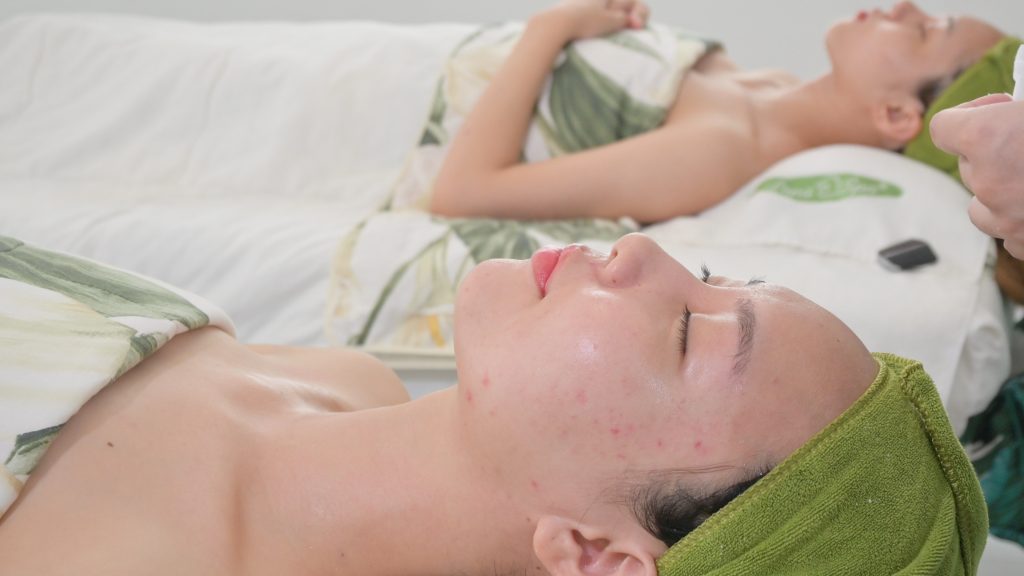
⑤ What actually happens in a routine session
Skin Lab Acne (SPA1) — 9 steps. 1. Cleansing: makeup removal, cleanser, exfoliation. 2. Releasing congestion: steam, pre-extraction softening, oil absorption. 3. Acne management: extraction, antisepsis, disinfection. 4. Soothing mask to reduce swelling and inflammation. 5. Bio light for antibacterial and calming effect. 6. Electroporation of an anti-inflammatory, oil-reducing serum. 7. Spot treatment of inflammatory lesions. 8. Moisturiser plus sunscreen. 9. Head massage.
On step 3, the service documentation specifies that extraction is performed by several methods matched to the lesion type: a Pakistani professional extractor, medical cotton swabs, or manual technique following the Skin Lab method — each skin condition is matched to a method in order to minimise tissue trauma and discomfort.
Perfect Eyes (SPA9) — 7 steps. 1. Cleansing: makeup removal, cleanser, exfoliation. 2. Acupressure eye massage with cold quartz. 3. Korean RF wave therapy for wrinkles, shadowing and puffiness, rejuvenating the periorbital skin. 4. Mask to reinforce elasticity and hydration around the eye, combined with Omega biological light. 5. Electroporation of an anti-ageing eye ampoule. 6. Eye cream plus sunscreen. 7. Head massage.
The distinguishing core step in the remaining treatments. DPL Acne: a DPL pass for antibacterial and anti-inflammatory effect and to reduce post-acne marks, placed after the bio-light step and before serum electroporation. Epidermal Clarifying: oxygen-boosting facial massage (on non-acneic skin), an AHA/BHA peel to reduce oil and dissolve keratin, then extraction, with inflammatory lesions spot-treated using BPO 5% or salicylic 20%. Detox: a detoxifying, free-radical-reducing protocol with facial acupressure, bio-LED detoxifying light, and ampoule electroporation to reinforce the skin barrier. Refa Firming: a lifting contact therapy, a firming contour mask, lifting-tool/RF massage, and Matrixyl 3000 ampoule electroporation. Brightening: a vitamin C and arbutin mask, bio-LED light to inhibit melanin formation, and tranexamic acid serum electroporation. Calming Spa Facial and Deep Hydration share a sequence — rehydrating massage, electroporation of an energising serum, and a hydrating modeling mask — differing in the intensive water-binding and occlusive product system used in Deep Hydration.
One detail repeats across all nine protocols and reveals the logic of the group: the last step before the closing massage is always moisturiser plus sunscreen. Immediately after the stratum corneum has been thinned, skin is more UV-sensitive than usual. A routine session followed by careless sun exposure is a session neutralised.
⑥ Who the routine group suits — and who it does not
Suitable. Closed comedones and mild congestion with fewer than two or three small inflammatory lesions. Oily skin, thickened keratin, and male clients with little time who need efficient cleansing. Skin that congests easily, looks dull, or is regularly exposed to pollution. Dry, dehydrated, flaking skin. Sun-exposed skin and mild unevenness of tone. Early ageing with reduced elasticity and fine lines. Eye areas with mild shadowing, dehydration and few lines. Anyone wanting a relaxing session combined with proper cleansing, without a complex protocol. Sensitive skin and pregnancy also have an option here — the Detox treatment is documented as using purely natural, well-tolerated products suitable for sensitive skin and during pregnancy.
Not suitable.
Inflammatory acne beyond the threshold. The service documentation is explicit: where inflammation exceeds two or three small lesions, the client should be advised onto a dedicated acne treatment protocol. Numerous pustules, cysts, nodules and widespread inflammation are a medical condition needing a physician and prescription therapy, not a maintenance treatment. Go to Lona Skin Lab Dermatology Clinic.
Dermal melasma. Once pigment sits in the dermis, a surface brightening treatment cannot reach it. The routine group helps tone stay even and keeps baseline pigment from accumulating, but it does not treat melasma, which needs a physician to classify the type, exclude hormonal and drug triggers, and build a protocol.
Atrophic acne scarring. Lost dermal tissue. No surface treatment fills it. This is clinic work.
Active skin disease. Psoriasis, flaring atopic dermatitis, active rosacea, fungal infection, active herpes, unhealed wounds. See a doctor first; do not book.
Acute topical-steroid-damaged or severely barrier-impaired skin. Burning, constant stinging, flaring breakouts. This phase needs physician supervision.
Anyone on skin-thinning medication or actives. Isotretinoin, high-strength retinoids, recent laser or deep peel. You must wait, and your treating physician sets the interval.
Anyone who wants sessions stacked closer together to go faster. We will decline. The interval must match the skin’s cycle; compressing the schedule does not compress biology, it only creates a new problem.
⑧ Frequently asked questions
How is an in-clinic hydrating mask different from a sheet mask at home?
In three ways. It follows a sequence that has already cleansed the skin and released congestion, so actives meet a surface ready to absorb. A modeling mask sets into an occlusive film that reduces transepidermal water loss in a way a sheet mask cannot. And the mask type is selected for your skin’s condition on the day. But an in-clinic mask does not replace daily moisturising at home.
How long does the hydration from one session last?
It is temporary, because holding water in the skin is the lipid barrier’s job and that barrier is depleted daily. This is precisely why the group is called routine care: it offsets a continuous process rather than fixing a one-off incident.
How is routine care different from advanced treatment?
By role, not by quality. Routine care keeps the balance: low intensity, even intervals, done before symptoms appear. Advanced treatment pulls a condition that has already shifted back toward normal: higher intensity, aimed at a specific target. Applying the wrong group to the wrong problem is the most common way people waste money on skin.
My skin is fine — do I need anything done professionally?
Not necessarily. If you can only do one thing, do the home foundation: gentle cleansing, moisturising, sun protection. Professional routine care adds two things that are hard to do at home: extraction of mature comedones lodged deep in the follicular canal, and an objective skin assessment that catches change before it becomes a problem.
How often should I come?
The interval is set after a skin assessment, because it depends on the treatment and your skin. We do not quote a universal number, and we will not book you more frequently than your skin recovers. For the firming treatment specifically, the service documentation states a course of roughly 5–7 consecutive sessions combined with home care as instructed.
Where can I get routine skin care in Can Tho?
Lona Home Spa — T2 Dinh Cong Trang Street, Ninh Kieu Ward, Can Tho City, Vietnam — offers 9 routine skin care treatments, all non-invasive. If the assessment shows your condition has moved beyond the scope of care — significant inflammatory acne, dermal melasma, atrophic scarring — you will be referred to Lona Skin Lab Dermatology Clinic in Can Tho at the same address, under a specialist dermatologist.
I have a lot of inflammatory acne — can I book the acne treatment here?
You should not. The acne treatment in the routine group suits skin with fewer than two or three small inflammatory lesions; beyond that you need a dedicated acne protocol. The practitioner assesses this at the start of the session and will say plainly if you belong in the referral group.
Can I have treatment while pregnant?
There is an option. The Detox treatment is documented as using purely natural, well-tolerated products suitable for sensitive skin and during pregnancy. Energy-based and peel treatments are not. Tell us you are pregnant when you book.
Is extraction included in the price?
In this group, extraction of mature comedones with antisepsis and disinfection is part of the standard protocol. All figures quoted are listed prices, before any seasonal offers, and subject to adjustment according to each client’s individual condition.
Is there anything suitable for men?
Yes. The Epidermal Clarifying treatment is described as suiting male clients with little time for skin care who still want efficient, thorough cleansing, particularly where skin is thickened and oily.
Will I need downtime afterwards?
No. This group is selected for no downtime; several service descriptions state clients resume normal activity and work afterwards. Diligent sun protection in the following days is mandatory.
How far in advance of my flight should I finish?
Lona recommends leaving at least 2 weeks between your last treatment and your flight. This is the clinic’s general recommendation; the exact interval for a specific procedure is set by your treating physician.
⑩ Home care between sessions
If you come every few weeks, your skin spends 95% of its time in your hands. Three essentials, in priority order: sun protection daily in adequate quantity, because it governs both evenness of tone and the pace of ageing; a barrier-repair moisturiser, because the barrier holds the water and holds every result you have just paid for; and gentle cleansing, meaning clean enough rather than stronger than necessary. Daily physical exfoliation is not on this list. The corresponding ranges — gentle cleansing, barrier repair, sun protection and intensive hydration — are available at lona.vn. If you are unsure how to combine them, send us your current product list for review.
⑨ Message us
The first question to ask is not “which treatment” but “is my skin in the balance-keeping problem or the pulling-back problem”. The two answers lead in different directions, and choosing wrongly sends both your time and your money to the wrong place. Send us photographs taken in natural daylight together with the list of products you use, and a dermatologist and skin-analysis specialist will tell you which direction you should take.
- Messenger: https://m.me/lonaskinlab.vn?ref=cum-14
- Zalo: https://zalo.me/4428027389339512399
- Hotline: 0777 679 902 · WhatsApp +84 777 679 902 · Contact@lona.vn
Lona Home Spa T2, đường Đinh Công Tráng, phường Ninh Kiều, TP. Cần Thơ (T2 Dinh Cong Trang Street, Ninh Kieu Ward, Can Tho City, Vietnam) Hotline: 0777 679 902 · 0932 927 723 Operating licence: 735/CT-GPHĐ · Advertising licence: 4770/XNQC-SYT Medical director: MSc. Dr. Lê Thị Thảo Vy — Dermatology